
If you've ever sourced ingredients, you already know how this story goes.
A supplier hits every number on paper: right spec, right price, right lead time. Everything looks great… until a shipment runs late, QA can't get the paperwork they need, and production comes to a standstill.
That's when you realize: the spec sheet is the least important part of the relationship.
When you're buying sea salt for large-scale food production, the real question isn't "who's cheapest per pound?" It's "who's going to make my life easier when things go sideways?"
Here's what to look for in a supplier who'll keep you running, compliant, and sane — long after the ink on the contract dries.
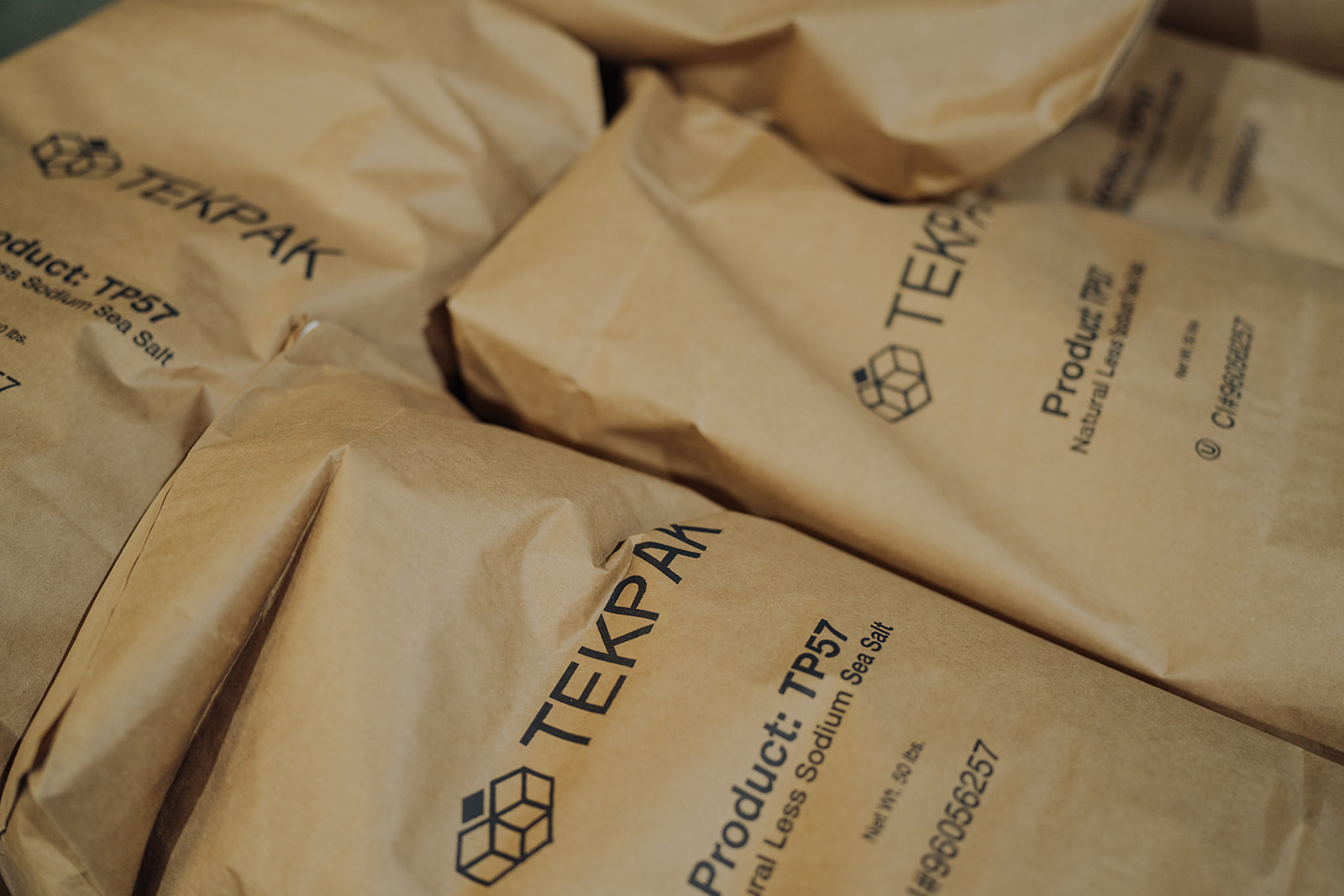
TEKPAK's Marion, AL facility maintains significant on-hand inventory of sea salt — a key part of supply stability for large-scale food production partners.
1. Make Sure They're Built for Stability
Most buyers underestimate how messy salt supply chains can get.
A lot of U.S. producers pull from inland lakes or evaporation ponds that freeze, flood, or dry up. Some even reallocate their production to favor retail brands when things tighten.
So the first thing to check is how stable their source and stock really are.
Key questions to ask:
- "Where is your salt sourced?"
- "How much inventory do you typically keep on hand?"
- "What happens if your main origin is delayed?"
You're looking for clarity, not optimism.
If they can't walk you through their buffer strategy — or worse, don't have one — your production schedule becomes the buffer.
How TEKPAK handles this: TEKPAK keeps significant on-hand inventory and uses long-standing relationships with large international producers — including sourcing from the Dead Sea. That's the kind of stability that keeps your team from scrambling when market supply gets tight. Learn more about TEKPAK's Dead Sea salt supply.
2. Pay Attention to How They Communicate
You can tell a lot about a company by how quickly they answer your emails.
A strong supplier doesn't just deliver product — they keep you in the loop. Delays happen, but the difference between a quick heads-up and a surprise shortage is massive.
Good communication looks like:
- Quick replies. Not days later.
- Clear answers. Not vague holding statements.
- Transparency about capacity. Especially during peak months.
- No fear of introducing you to QA, operations, or leadership.
Because when there's a logistics hiccup — and there will always be one eventually — you want a supplier who calls you early, not one who waits until your team notices.
Questions that reveal a lot:
- "Who would I contact if something urgent happens late in the day?"
- "How do you usually notify customers about delays or changes?"
- "Can I speak directly with QA if needed?"
How TEKPAK handles this: Customers have direct access to decision-makers — including quality assurance, production, and customer service teams. That's the difference between a two-minute answer and a two-day slowdown.

Direct access to production and quality leadership at TEKPAK's Marion, AL facility — not just a generic inbox.
3. Prioritize Flexibility
Every supplier claims they can scale. The question is how fast — and at what cost.
Maybe you're testing a reduced-sodium blend or ramping up for a national launch. You need a partner who can handle pilot runs now and truckloads later without re-quoting every time your volume changes.
Look for:
- Multiple grain sizes.
- Flexible MOQs.
- Custom blends.
- Ability to support both small pilot runs and large recurring orders.
- Consistent lead times, even during seasonal spikes.
Ask:
- "What does your turnaround look like for a truckload?"
- "Can you handle trial runs before we scale?"
- "What does rush capacity look like during peak months?"
How TEKPAK handles this: TEKPAK can turn around truckload quantities within approximately two weeks and accommodates custom reduced-sodium blends based on your spec window. The goal isn't "fastest" — it's predictable.
4. Check Their Quality Culture, Not Just Their Certifications
Every facility waves around its certifications. The real test is how they respond when you ask about their last audit.
A company with a strong quality culture won't get defensive. They'll walk you through what they found, how they fixed it, and what they improved afterward.
A quality-focused partner will:
- Openly share minor findings from audits.
- Explain how they resolved them.
- Provide documentation quickly.
- Maintain transparent corrective action processes.
The certificate isn't the story — the mindset is.
Questions that separate strong programs from checkbox programs:
- "When was your last audit?"
- "What changes came out of it?"
- "How fast can you provide documentation if my QA team asks?"
How TEKPAK handles this: TEKPAK holds a BRCGS AA rating — the highest available — at both Alabama facilities, and openly discusses audit findings. That openness is the real sign of a mature quality culture. Learn what an AA rating actually means for your brand →
5. Choose Technical Know-How Over Order-Taking
Salt seems simple until you're reformulating. Then it becomes chemistry, labeling, particle size, and functionality all at once.
The right partner should be able to:
- Review your specs.
- Recommend the correct grain size.
- Help with sodium-reduction targets.
- Provide guidance on ingredient declarations.
- Collaborate with your R&D or regulatory team.
How TEKPAK handles this: TEKPAK blends sea salt and potassium chloride (KCl) in-house and works directly with R&D teams to match specific sodium goals without affecting flavor or processing.
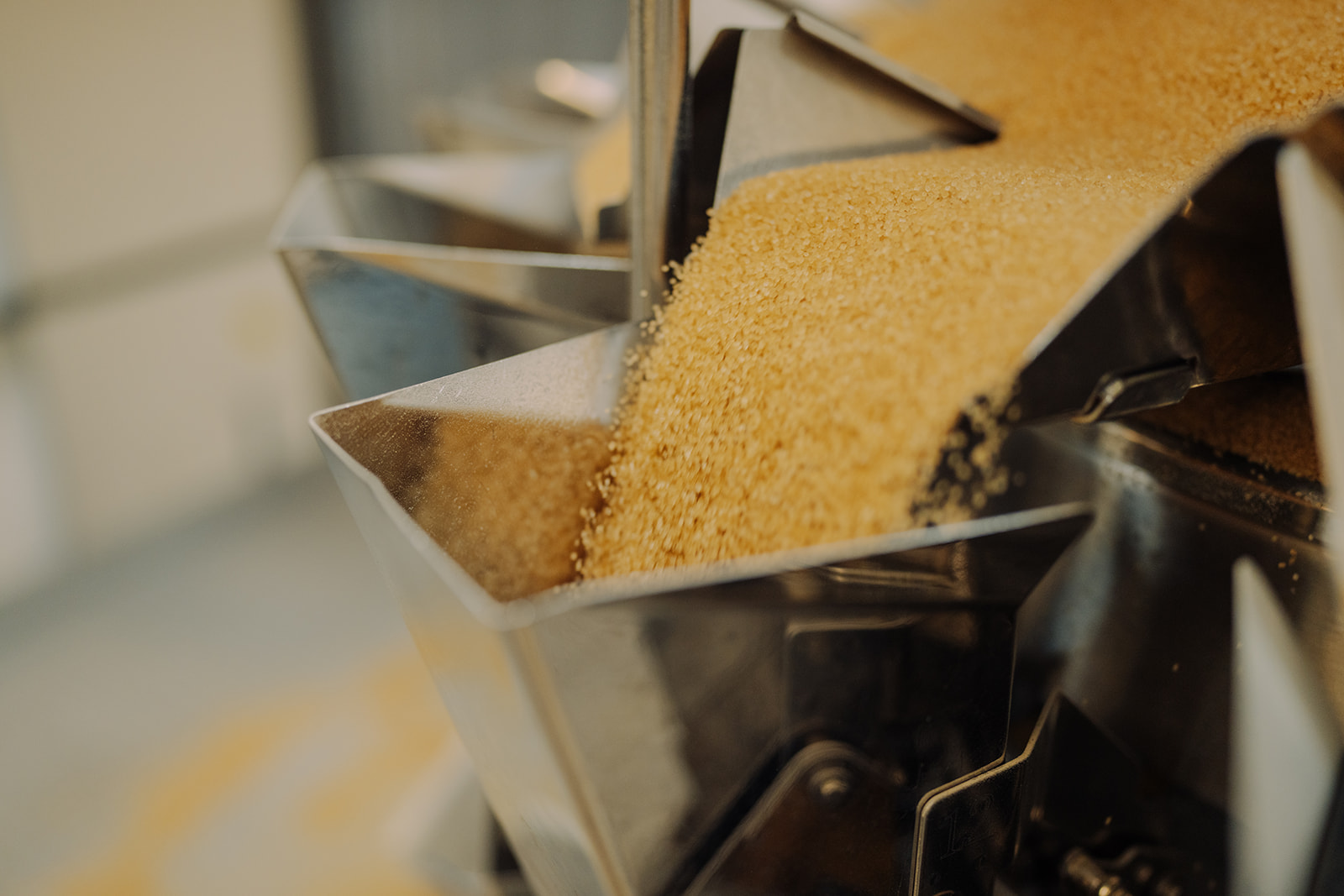
TEKPAK's Marion, AL facility handles custom blending for reduced-sodium applications, supporting R&D teams from pilot run through full-scale production.
6. Consider Their Long-Term Stability
Even the best product means nothing if the supplier can't stay afloat.
A strong supplier should be able to talk confidently about:
- Leadership continuity.
- Customer diversity.
- Equipment investments.
- Planned line expansions.
- How long they've been serving similar customers.
These signals tell you whether they're in a growth phase, a holding pattern, or quietly struggling.
How TEKPAK handles this: TEKPAK serves major customers in poultry, seasoning, and ingredient manufacturing and is actively investing in expanded reduced-sodium and sea salt capabilities. That's the kind of trajectory that keeps your supply risk low.
7. Make Sure They Support Compliance
Nothing slows a launch like a labeling surprise.
Before you choose a supplier, ask:
- "What documentation do you provide?"
- "Can you support ingredient declaration questions?"
- "How quickly can you turn around spec updates or COAs?"
A strong supplier saves your team from last-minute chaos. A weak one sends you PDFs at the worst possible time.
How TEKPAK handles this: Documentation is provided directly to QA and regulatory teams on request — which helps everything move smoothly from formulation to packaging.
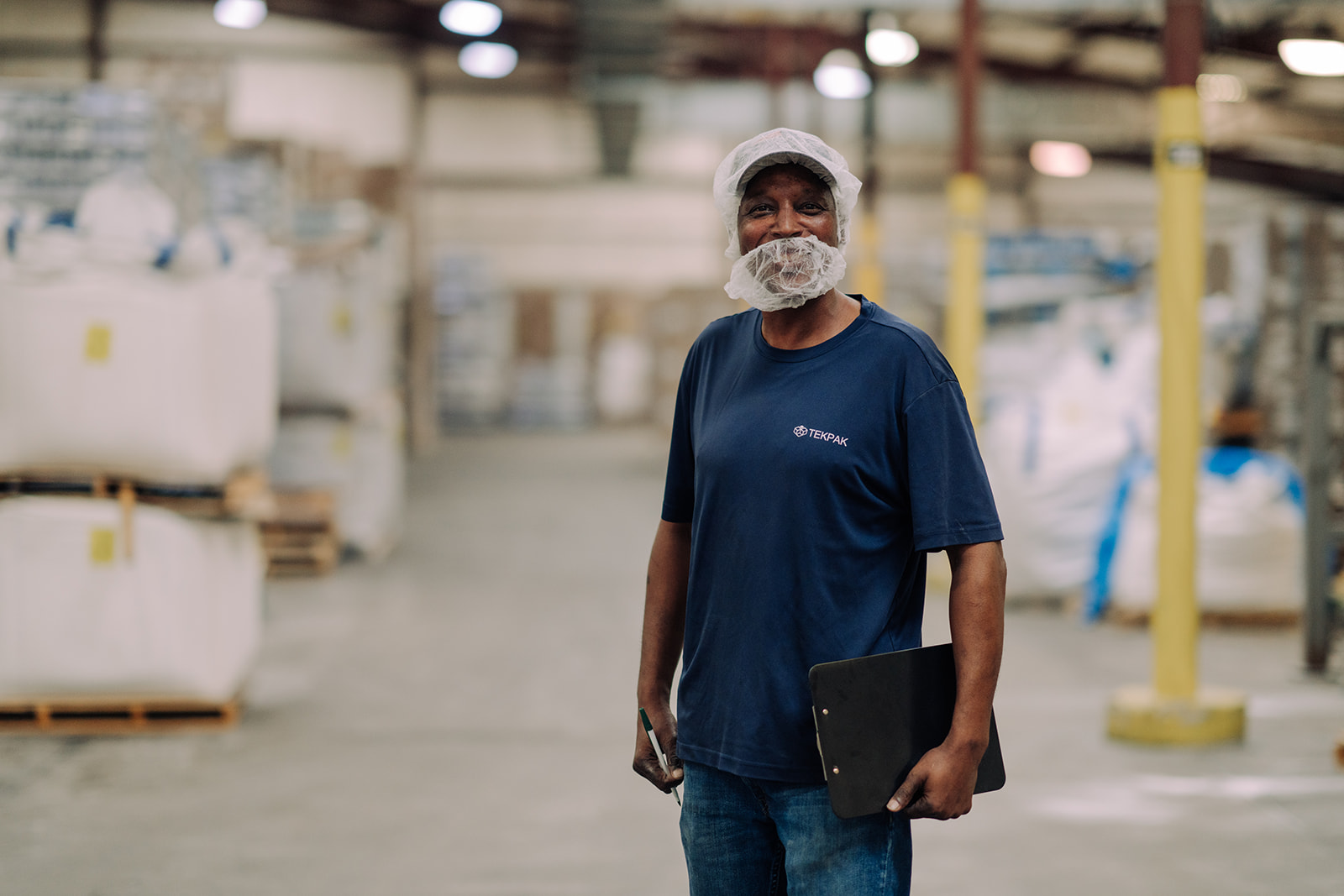
The team at TEKPAK's Marion, AL facility — available and accountable, not just at audit time.
Wrapping Up
The right sea salt supplier keeps your production lines running, your QA team happy, and your labels clean and compliant. The wrong one keeps you up at night.
A strong sea salt supplier:
- Communicates clearly.
- Maintains reliable stock.
- Adapts to your production needs.
- Supports your QA and R&D teams.
- Understands labeling and compliance.
- Has the stability to be around long-term.
Those are the partners that make your job easier and your production calendar calmer.
Want to see what this looks like in practice? TEKPAK handles both sea salt supply and reduced-sodium blending — and is happy to walk through what the process looks like for your production needs.